Moyamoya is a progressive narrowing of important arteries at the base of the brain, accompanied by the development of small collateral vessels. It can affect both children and adults, but presentation, evaluation, and treatment planning are not identical across ages. Care is usually coordinated by a cerebrovascular team familiar with the condition and with surgical revascularization.
This article covers Adult and Child & family. Reading with one situation in mind? Highlight what applies most — everything stays visible.
What moyamoya is
In moyamoya, the end portions of the internal carotid arteries and nearby branches become narrowed or blocked. Collateral vessels can develop as the brain attempts to maintain blood flow. These vessels create the characteristic angiographic pattern associated with the name, but the diagnosis depends on a complete imaging and clinical evaluation rather than on a name or one symptom.
The condition can affect one or both sides and may change over time. Its effect on blood flow varies, which is why structural images of the arteries and studies of brain perfusion may both contribute to planning.
Moyamoya disease and moyamoya syndrome
Moyamoya disease generally describes the characteristic arterial changes when they are not attributed to another associated disorder. Moyamoya syndrome describes a similar vascular pattern occurring with another recognized condition. The distinction can guide evaluation for associated conditions and shape long-term care, even though both may require assessment of blood flow and stroke risk.
Terminology is not a substitute for investigating the cause and extent of the arterial changes. Specialists may review medical and family history and decide whether additional laboratory or genetic evaluation is relevant.
How it may present
Most relevant to: Child & family
Children often come to attention because of temporary or lasting symptoms related to reduced brain blood flow, such as weakness, speech difficulty, sensory changes, or stroke. Headache, seizures, learning concerns, or changes in attention may also prompt evaluation. Symptoms can be brief, recurrent, or persistent.
Most relevant to: Adult
Adults may have ischemic symptoms from reduced blood flow or hemorrhagic symptoms from bleeding, as well as headache, seizures, or incidental imaging findings. These are not exclusive age categories, and the presentation of one person cannot be predicted from age alone. Sudden weakness, numbness, speech or vision difficulty, severe imbalance, a new seizure, or a sudden severe headache warrants emergency assessment.
Evaluation and imaging
Evaluation commonly combines a neurologic history and examination with brain and blood-vessel imaging. MRI can look for prior or recent injury, while MRA or other angiographic imaging shows the arteries. Catheter angiography may provide more detailed information about narrowing, collateral pathways, and vessels that could be used for a bypass.
Perfusion and cerebrovascular-reserve studies can help the team understand how well blood flow responds to demand. The exact testing sequence depends on symptoms, age, earlier studies, and the question being addressed. Imaging is interpreted together rather than used as an isolated score.
Why age matters
Children and adults differ in typical presentation, vessel size, developmental needs, associated conditions, and the time horizon for follow-up.
Most relevant to: Child & family
In children, the team may consider school performance, development, and the practical demands of imaging and recovery.
Most relevant to: Adult
Adult planning may place different emphasis on hemorrhagic presentation, other vascular health conditions, work, and caregiving responsibilities.
Age does not select an operation by itself. Symptoms and history, arterial and donor-vessel anatomy, perfusion, prior procedures, and the experience of the treating center remain important. Pediatric evidence also has limitations, so conclusions from grouped studies must be applied carefully to an individual child.
Revascularization approaches
Revascularization surgery aims to provide an additional route for blood to reach the brain. A direct bypass connects a scalp artery to a brain artery. An indirect procedure places vascularized tissue in contact with the brain so new blood-supply pathways can develop over time. A combined operation uses elements of both.
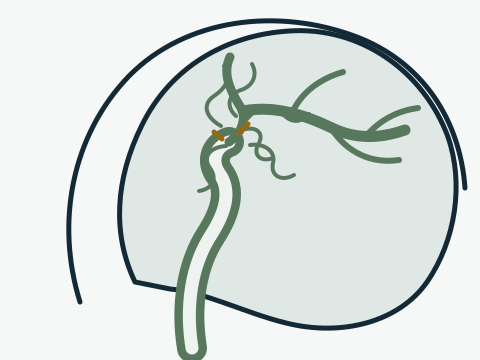
The internal carotid ends narrow; small collateral vessels develop as the brain works to maintain flow.
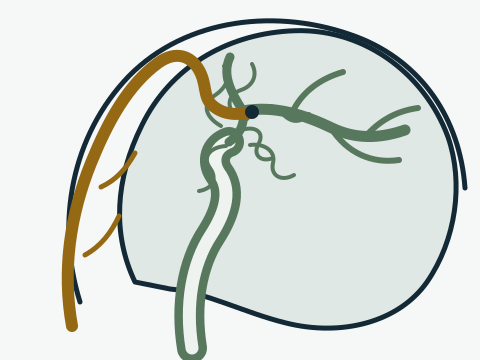
A scalp artery is connected directly to a brain-surface artery, adding a new route immediately.
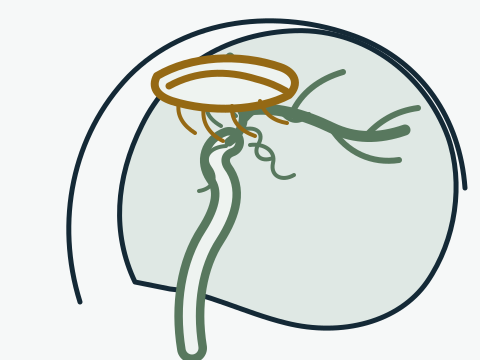
Vascularized tissue is laid on the brain’s surface so new blood-supply pathways grow in over months.
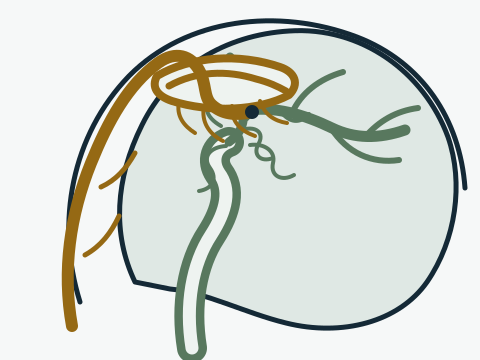
Elements of both: a direct connection plus tissue that supports longer-term new vessel growth.
There is no single operation for every adult or child with moyamoya. Vessel size and availability, the areas at risk, the urgency and pattern of symptoms, prior surgery, and surgeon and center experience all influence the plan. Published pediatric analyses compare these approaches but do not establish one universal technique for every child. A consultation should address why a proposed approach fits the specific anatomy and clinical goals.
Long-term follow-up
Moyamoya care continues after an operation or a decision to observe. Follow-up may include review of new symptoms, neurologic function, medications, and repeat vascular or perfusion imaging. Children may also need attention to learning, development, and changing activity needs as they grow.
The timing and type of surveillance are individualized. New neurologic symptoms require prompt evaluation rather than waiting for a scheduled visit, and changes on imaging should be interpreted by the treating team in the context of symptoms and prior studies.
Questions for a cerebrovascular team
Moyamoya and cerebral bypass are part of Dr. Oushy’s cerebrovascular practice, in adults and children.
Terms used in this article
- angiography
- Imaging of blood vessels, using contrast with X-ray, CT, or MRI, or through a catheter for the most detailed views.
- collateral vessels
- Small blood vessels that develop or enlarge to carry blood around a narrowed or blocked artery.
- perfusion
- How blood flows through brain tissue; perfusion studies estimate whether enough blood reaches each region.
- revascularization
- Surgery that provides an additional route for blood to reach the brain.